
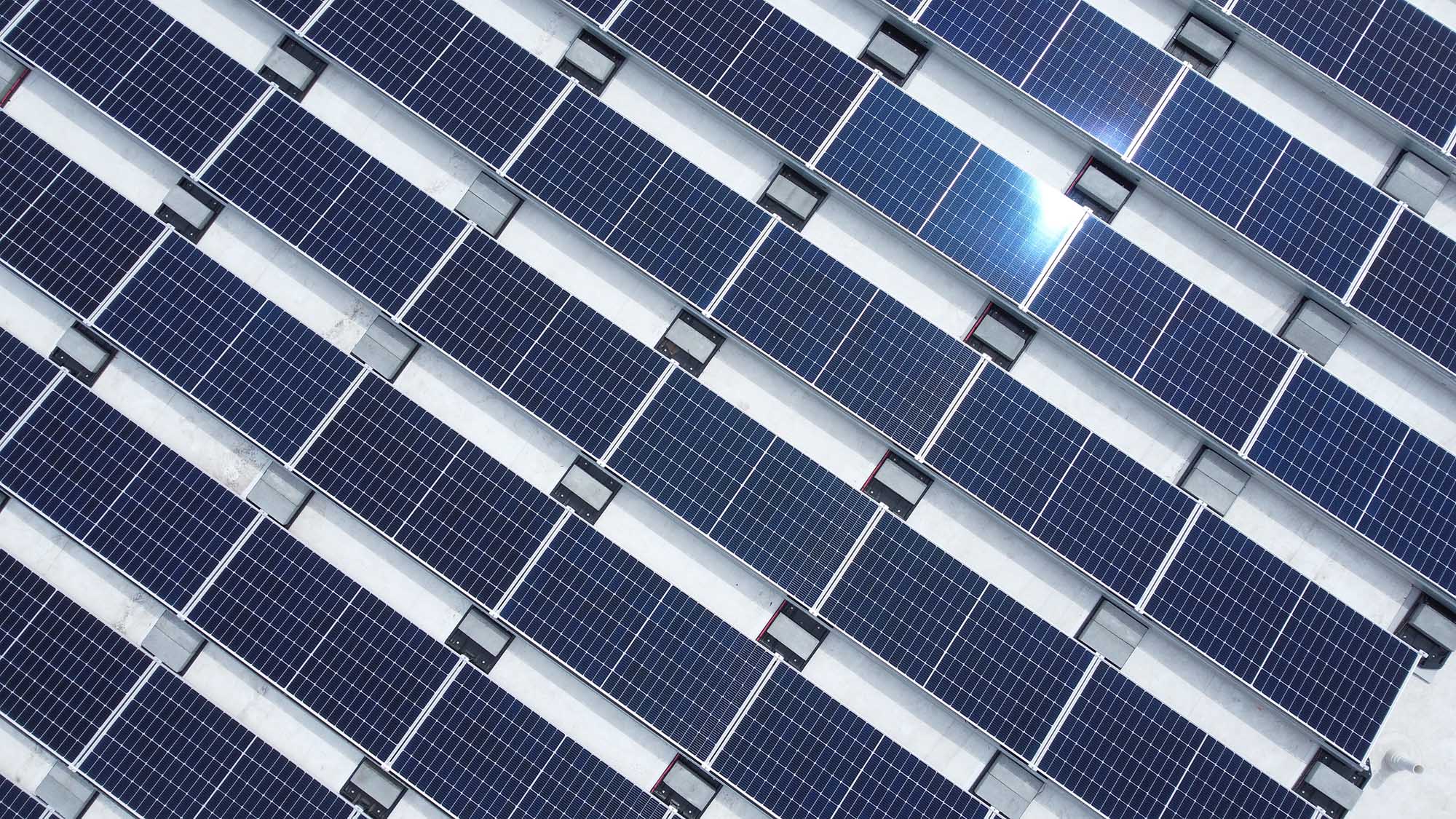

70,000 Solar Panels to be Installed Every Hour
Recent statistics have shown a promising future for global solar development. The most recent BP Statistical Review of World Energy has shown that renewable energy was the fastest growing energy source in 2017, with solar being a major contributor.

Sysco Announces Plans for Multi-Site Solar Garden
With over 65,000 associates and 300 distribution facilities serving 500,000 customer locations, there's no doubt that Sysco has some high energy needs. On June 6th, the company signed a ten-year renewable energy agreement; subsequently, three solar garden sites are being constructed in Texas, which will provide about 10% of Syscos U.S. electricity usage.

Solar Energy for the Garden State
New Jersey Governor Phil Murphy signed two new energy bills to significantly advance New Jerseys clean energy economy. Signed into law on May 23rd, the legislature is intended to stabilize and grow New Jerseys renewable energy sector, and extend the cost-saving benefits of solar to more families, communitiesand businesses throughout the Garden State.

Half a Million Solar Panels for Walt Disney Company
Dr. Mark Penning, Vice President of Animals, Science and Environment at Disney Parks, announced in late April Disney's plan to bring a new 50-megawatt solar facility online by the end of the year; which would generate enough renewable clean energy to power two of its four theme parks in Florida.

Clean Energy for the Mainstream
Recently, large-scale gas and electric utilities are making commitments to a carbon-neutral future. Their motivations, however, are not rooted in corporate responsibility; instead, economic trends are pointing to renewables for competitive advantage.

Blockchain Technology for the Solar Industry
Blockchain technologies have been gaining notability due to the recent cryptocurrency hype. However, the same peer-to-peer networking technology that enables cryptocurrencies, like Bitcoin, provides a model for application across industries beyond finance; for example, the energy sector. New developments have seen blockchain technologies as a disruptive force for grid management. What could this mean for the solar industry?
